Programme
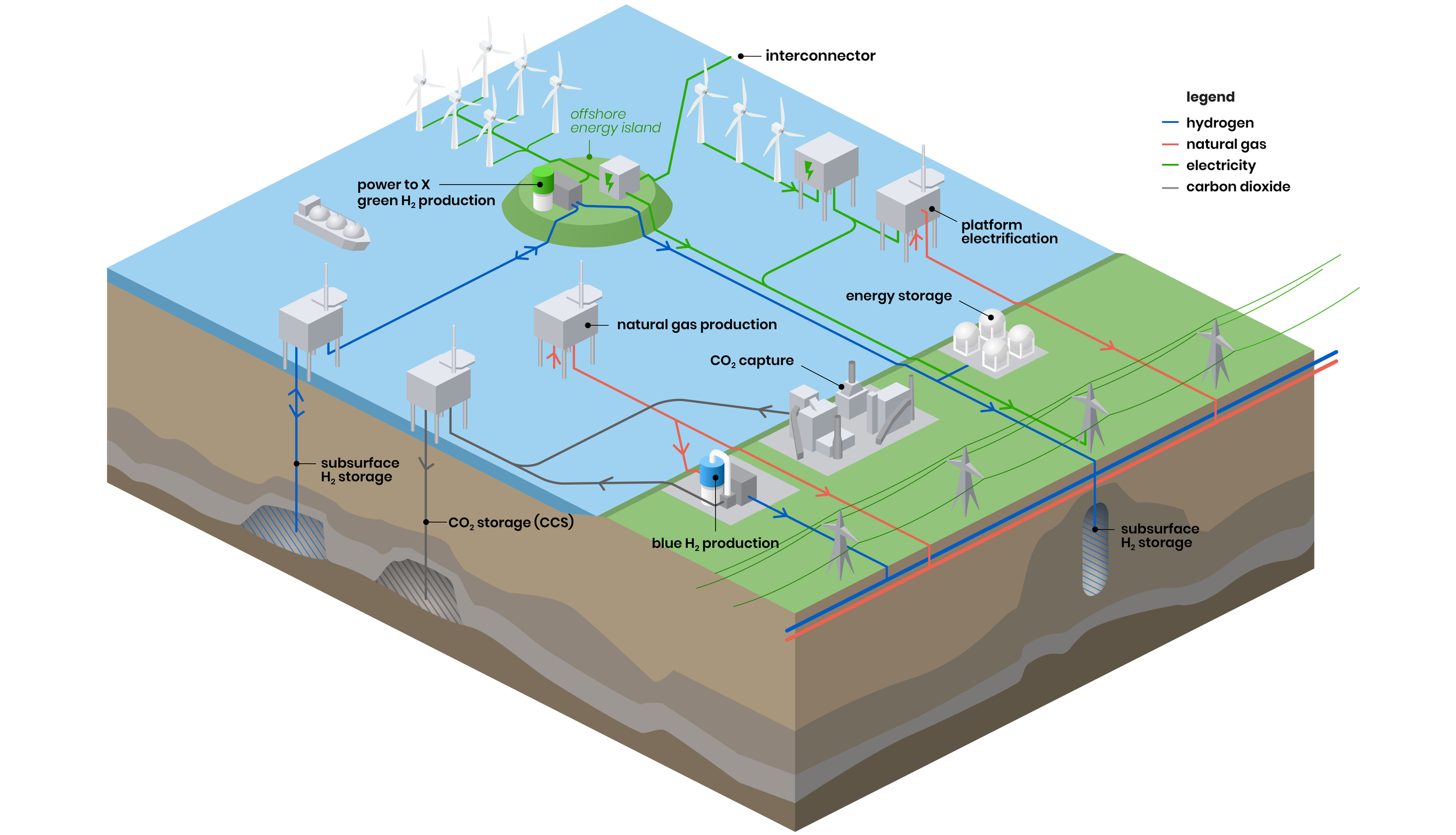
The NSE premise is that integrated infrastructure for offshore wind, hydrogen, CO₂, and natural gas unlocks powerful synergies. These benefits will help Europe shape an energy system that is affordable, secure and sustainble.
Collaboration to Gain Insights
NSE is characterized by strong cooperation and knowledge sharing amongst the partners. Our partners are a mix of national and international organisations -public and private- joined together by the shared ambition to deliver compelling insights of an integrated approach for offshore energy. NSE is supported by Energy Innovation NL.
Our knowledge and tools support policy makers and investors to make informed decisions for the future offshore energy system. Besides our research work, we also support pilots and projects that test and demonstrate innovative concepts in practice, such as the PosHYdon project.
We deliver insights across five strategic dimensions:
-
Affordability and Competitiveness: Integrated offshore energy systems significantly lower transition costs. NSE provides business case insights that help align market design, regulation, and investments.
-
Multi-use of Space: Nature- and society-inclusive designing supports multi-use of space and minimizes spatial claims conflicts. NSE provides spatial optimization tools for smart spatial choices and balanced decision-making across sectors.
-
Security by Design: A robust and reliable infrastructure, energy safety and security are needed for the physical protection of offshore energy systems. To increase awareness, NSE assesses the physical and cyber resilience of CCS and hydrogen.
-
International Collaboration: Alignment of infrastructure, regulation, and investments across North Sea countries accelerates the energy transition. NSE provides a co-created roadmap and drives international collaboration.
-
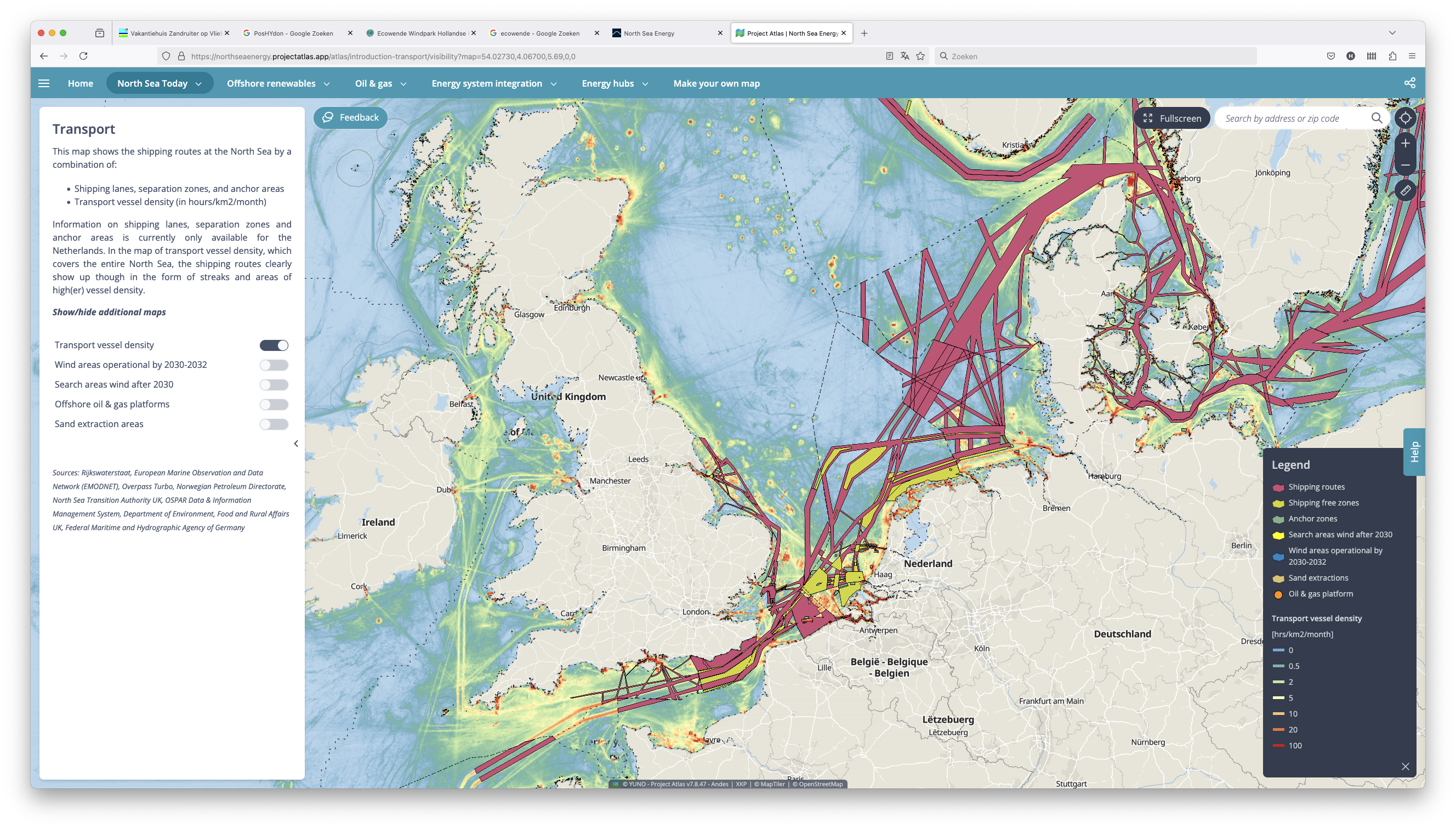
Actionable Tools and Knowledge: NSE translates complex research into practical knowledge and system design tools enabling faster and better-informed decision making. The NSE Atlas offers an interactive comprehensive overview of key activities in the North Sea. Our ESDL-based data repository and IT-toolbox offer energy system simulation and optimization models/tools. The BINDit dissemination tool provides you easy access to research results by compiling a personalized summary of the results based on your own interests.
An Integrated Offshore Energy System
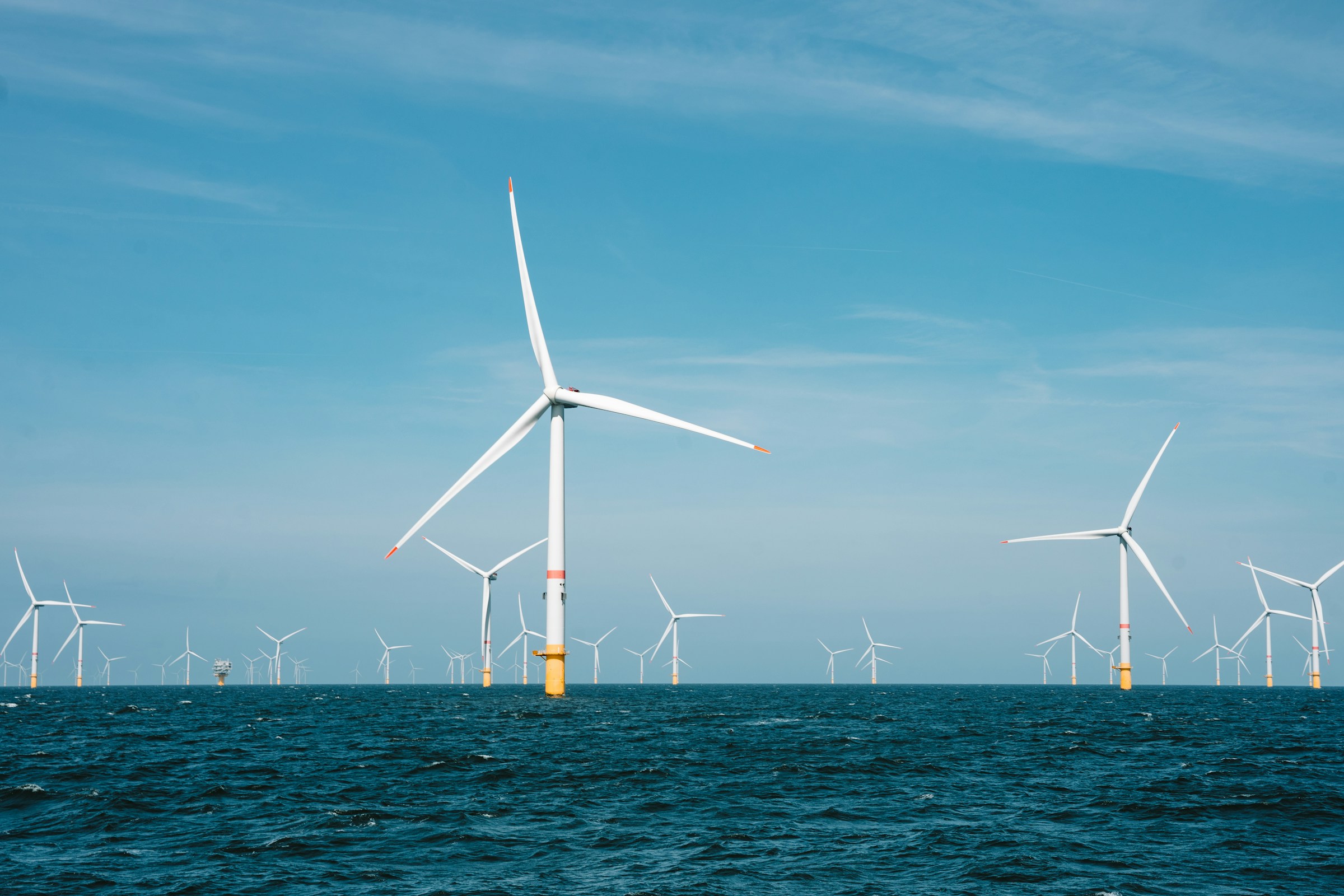
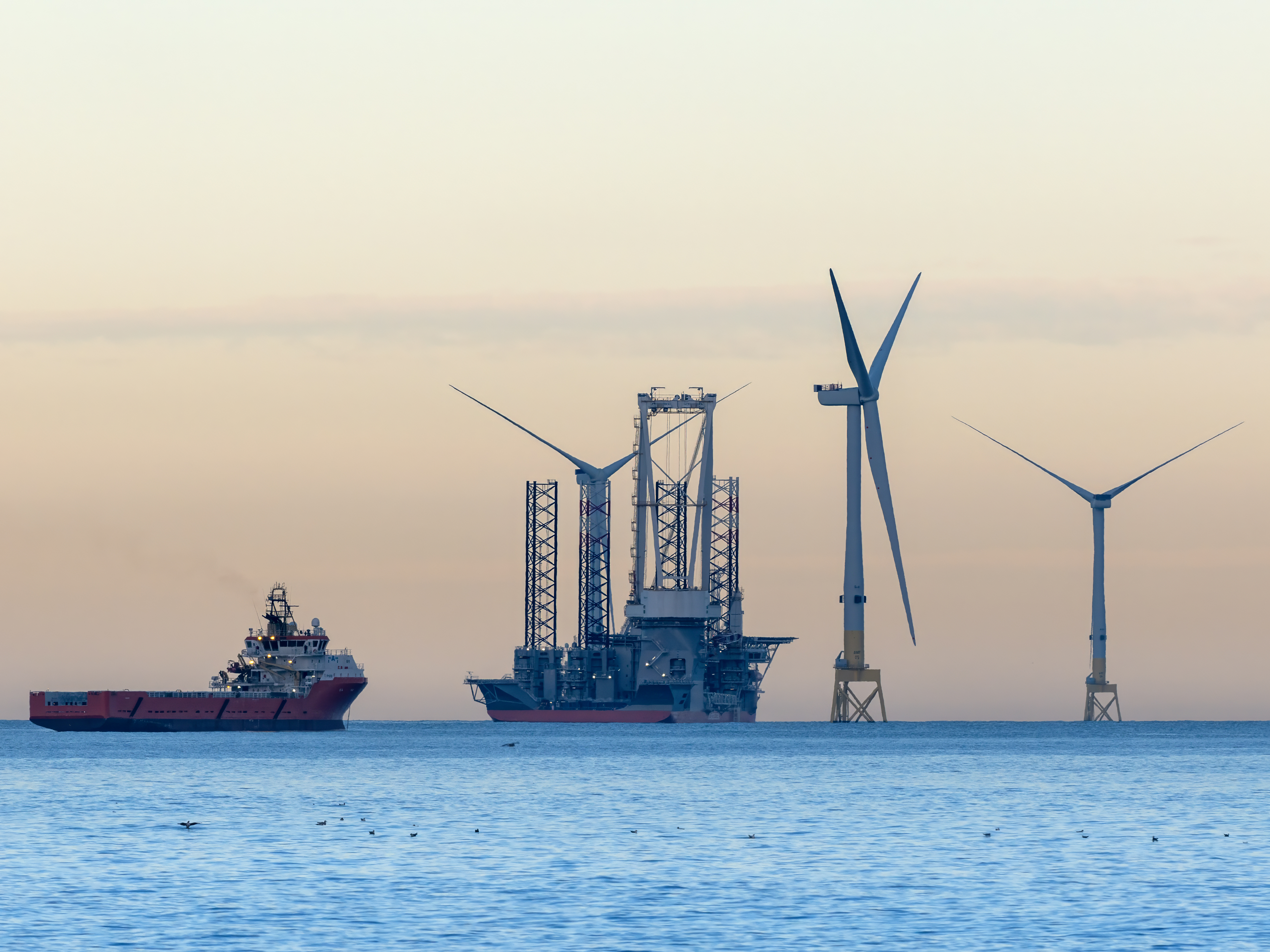
The North Sea has long been central to Europe’s energy supply through oil and gas. Today, it's rapidly transforming into a cornerstone of a carbon-neutral energy system.

NSE positions the North Sea as Europe’s future energy hub — while emphasizing that this transition must be carefully managed to balance energy production, nature conservation, economic interests and infrastructure security. We approach the North Sea area as an integrated system where energy, ecology, and economy are interconnected.
NSE's premise is that integrated infrastructure for offshore wind, hydrogen, CO₂, and natural gas unlocks powerful synergies. Benefits deriving from this help Europe shape an energy system that is affordable, secure and sustainable.
To support policy makers, industry decision makers and energy investors in shaping the European energy transition, we develop concepts, pre-designs, scenario's, strategies and tools, such as:
- Future-proof concepts for offshore energy clusters connecting wind, hydrogen, natural gas, and CO₂ infrastructure across countries.
- Integrated cluster pre-designs for offshore and port-based energy systems to guide offshore energy development towards 2050 and beyond.
- Scenarios, strategies, and digital tools that support policy- and investment decisions.
Work Packages
The NSE workgroups bring together experts from our partners across industry, ports, academia, and engineering to develop knowledge, insights, and practical tools within dedicated work packages.
Working from an integrated perspective, the workgroups combine technical, ecological, economic, legal, and security expertise to address the North Sea's complex energy challenges. Their collaborative approach results in innovative solutions that support offshore system integration, reduce costs and emissions, optimize the use of space, strengthen energy security, and safeguard the marine environment.
Objectives: design spatially explicit offshore energy clusters (formerly known as hubs) for selected North Sea countries. These clusters are locations where new and existing infrastructure assets (such as cables, wind farms, pipelines, platforms, etc.) may be strategically combined to reduce costs, space and time for the energy transition. The concerned energy commodities are electricity, hydrogen, CO2 and natural gas.
Scope
The countries in scope are the Netherlands, Belgium, Denmark, Germany, Norway and Denmark, and the UK.
Four cluster designs will be developed for the Netherlands, where clusters North, East and West will be updated based on previous NSE work, and cluster South will be added. The other countries will have one (optional two) cluster per country.
Next to this, these offshore energy clusters will be coupled to onshore harbour (industrial) clusters of these North Sea countries. This includes the design of the offshore grid infrastructure for a period up to 2050.
By adding more offshore energy clusters and onshore harbour clusters, an international and integrated design is created for the North Sea energy transition entailing the four energy commodities.
Purpose
Significant collaboration with other work packages is foreseen, related to nature inclusive design, security of design, network simulations, economics, legal implications and logistics.
Examples:
- WP 5 develops the IT-toolbox that is necessary to adopt (if needed) the ESDL data repository and develop the designs of the offshore hubs. WP 1 populates the ESDL repository with asset data and applies the toolbox to optimize the design on asset and hub level and simulate energy flows for hub configurations.
- The ecological (environmental) impact of the technologies applied in the designs of the hubs will be studied in the Ecology work package 4 that aims to make the designs nature inclusive.
- WP 1 contributes to specific thematic research in work packages 2, 3, 4 and 6.
The final result will be presented as a conceptual vision on how the future energy clusters might develop.
The ambition for this phase is to develop these visions with a horizon beyond 2050, together with interim steps for 2030, 2040 and 2050.
Objectives: expand simulations for wind, hydrogen and CO2 transport and storage, and explore offshore interconnections in more detail. This work package applies advanced simulation and optimization tools, previously developed in the former phase, to the spatially explicit offshore and onshore energy clusters designed in WP1. The focus is on modelling electricity, hydrogen, and CO₂ infrastructure across the North Sea in an integrated way, where the addition of CO₂ is new compared to previous NSE phases. This enables a detailed energy and flow analysis of production, conversion, transport, and storage between the clusters. By simulating energy flows at both network and cluster levels (with hourly resolution), WP2 supports the evaluation of system performance, infrastructure needs, and flexibility options between the offshore and onshore clusters.
Scope
Key innovations include the integration of CO₂ transport and storage modelling, compatibility between electricity and hydrogen simulation tools, and the expansion of the modelling scope to include international and onshore clusters. Selected case studies will allow for zoomed-in simulations to assess local flexibility needs and solutions, and operational strategies. The results will inform infrastructure timelines and cross-border cooperation, contributing to an integrated North Sea energy system.
Purpose
A diverse range of technologies will be modelled following the storylines defined in WP1, encompassing wind, solar, offshore green hydrogen production and transport, platforms, islands/ decentral-based designs, CO₂ transport and storage, blue hydrogen, natural gas production and platform electrification, offshore energy storage (hydrogen and electricity) and re-purposed pipelines.
Other technologies may be included in some degree depending on the developments along the project: wave and tidal, offshore gas-to-wire, power-to-x (ammonia or methanol), offshore nuclear, offshore blue hydrogen, and small-scale (offshore) storage solutions.
Objectives: reduce spatial conflicts in offshore energy cluster design while minimizing the environmental impact and promoting nature-inclusive solutions. Spatial optimisation:
We will assess technologies and identify possible conflicts between different activities at sea, developing strategies to resolve them. The focus is on offshore wind, nature and technologies such as oil and gas production, CCS and hydrogen storage. We will use a 3D approach to study how activities interact across the seabed, water, sea surface and airspace, and how these interactions change over time. Logistics optimization:
We will explore how offshore projects can share logistics for installation, maintenance, operations and decommissioning, both nationally and internationally. The focus is on offshore wind, oil and gas, floating solar, CCS and hydrogen, including their spatial needs and impacts on nature. We will also assess the capacity and space needed at ports and test data-sharing technologies to improve offshore logistics planning. This will help us understand how better coordination can reduce emissions and costs and improve maintenance. Integrated energy cluster design:
Through stakeholder workshops and scenario planning, WP3 will develop integrated, nature-inclusive energy cluster concepts that balance energy production, the use of space and protection of marine ecosystems.
Scope
The focus is applied on the Dutch part of the North Sea with specific case studies that will be selected in the scoping phase of the program, but is targeted to include:
• Mining activities & offshore wind. Case studies on offshore wind, natural gas production and subsurface storage of CO₂ and hydrogen explore spatial conflicts, including decommissioning timelines and monitoring requirements. We focus on helicopter supply to hydrocarbon platforms, optimizing technological and logistical solutions. The studies assess spatial conflict resolution methods and stakeholder participation, while comparing North Sea cases internationally to identify similarities, differences and effective strategies (see also WP7).
•** Energy, Nature & Space**. We focus on offshore wind and hydrogen production and how they use space at sea, including their impacts on nature and opportunities to work with nature. We study the ecological effects of offshore hydrogen production and explore how wind turbines and hydrogen platforms can be placed to better protect nature. This includes looking at how the number, size and spacing of turbines affect energy production, wind effects and the space available for nature.
Where possible, the findings will also be applied to other international offshore areas.
Purpose
The work will support the offshore energy cluster design in WP1 by developing guidelines for nature-friendly design, shared use of space and circular use of resources.
We will assess the environmental and ecological impacts of hydrogen production and storage and CCS, building on the nature-inclusive design principles developed in the previous phase.
The research will include stakeholder workshops and discussions, supported by the Spatial Optimization tools (see WP6). We will also update the existing NSE Atlas with new data and features to meet users’ needs.
Objectives: provide insights into the energy system and market design economics on the Northwestern European scale and specifically identify a possible mismatch between system economics and business case specific drivers and barriers.
Scope
We will explore how market design, policy frameworks, and regulatory structures across North Sea countries influence the viability of offshore energy projects, with a focus on electricity and hydrogen.
Using international energy system modelling, WP4 simulates and optimizes new cost-optimal development pathways and market dynamics under different policy scenarios, including spot vs. PPA markets, bidding zones, and offshore infrastructure configurations.
Purpose
To investigate the impact of various policy scenarios on the business case, an overview will be created on offshore energy tender designs and it will be investigated which policies support sustainable energy development on the North Sea.
Complementing this analysis, WP4 investigates business cases for selected value chains, such as offshore hydrogen production and interconnectors. Through this, potential mismatches between system value and project incentives can be identified. A comparative review of offshore energy tender designs and policies across North Sea countries supports this analysis.
The results will include recommendations for aligning public and private value creation.
Objectives: analyse cyber- and physical risks in hydrogen and CCS value chains and consider threat scenarios that influence public opinion on carbon capture.
Scope
The work package evaluates vulnerabilities in infrastructure layouts and proposes design improvements to enhance safety and system resilience across the North Sea energy system.
In parallel, WP5 explores the development of a multi-use sensor network capable of monitoring environmental conditions, energy system operations, and security threats. This includes assessing the feasibility of dual-use monitoring tools and data (sharing) strategies for monitoring environmental, operational and security conditions in the North Sea.
Purpose
The work aims to lay the foundation for an integrated, real-time monitoring system that enhances situational awareness and supports safe, sustainable offshore energy development.
Objectives: develop a shared data repository, scenario visualisation and spatial planning tools for partners.
Scope
This work package develops and integrates the digital tools and data infrastructure that underpin the North Sea Energy program. It focuses on enhancing the North Sea Energy toolbox to support system design, analysis, and visualization in a transparent and user-friendly way.
-
The Energy Data Repository (EDR) and ESDL Mapeditor environment for standardized data management will be improved and data will be updated to improve transparency in model input data.
-
WP6 will advance spatial optimization tools for offshore energy planning, enabling better siting of turbines, cables, and clusters using data from the NSE Atlas.
Purpose
User interfaces and visualisation features will be expanded to support scenario analysis and stakeholder engagement.
The toolbox will also integrate the business case model developed in WP4, ensuring seamless access to assumptions, methods, and results across the program.
A white paper will be delivered on multi-use of offshore space to support the transition of the North Sea in three important areas: energy, food & fibres and nature. The white paper sets guiding principles for multi-use of space work in WP1 and WP7.
As a follow-up of the work on synergy in sharing offshore logistics that was started in the previous phase, an improved logistics strategy for two of the selected NSE hubs will be provided.
Objectives: identify opportunities and barriers for international cooperation on the offshore energy transition and strengthen overall collaboration across the North Sea countries.
Scope
Specific focus is on the international legal, institutional, and human capital barriers under various international energy futures. It focuses on aligning national strategies and addressing cross-border legal challenges, particularly for interconnectors.
Activities include organizing a series of international workshops – the North Sea Energy Roadshow -, online seminars and stakeholder events to foster dialogue, share best practices, and build a stronger North Sea energy community. Watch our Agenda!
Purpose
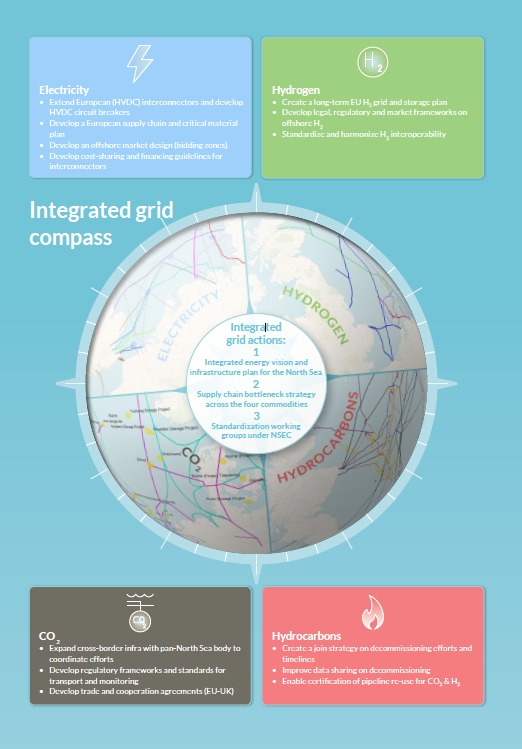
A key outcome is an action-oriented roadmap for North Sea energy system integration, co-created with stakeholders across countries via workshops and webinars (see an example of proposed actions in NSE North Sea roadmap).
The work also includes a legal assessment of cross-border infrastructure barriers. Insights from our Roadshow engagements will be fed into a shared vision and roadmap, to be communicated with key international working groups and platforms such as NSEC and GNSBI.
Objectives: improve coherence and collaboration across the North Sea Energy program by aligning activities, assumptions, and outputs between work packages.
Scope
It facilitates the sprint-based workflow, supports coordination among work package leads, consortium members, and stakeholders, and organizes internal reviews to critically assess key assumptions, methods, and results. WP8 also promotes scientific outreach and capacity building through MSc learning projects and engagement with academic institutions.
This WP also contains the communication efforts and organisation of annual engagement and knowledge co-creation events to engage with stakeholders across the North Sea.
Purpose
By connecting NSE research with external programs and knowledge networks, this work package strengthens the scientific foundation of the program and fosters broader dissemination.
Key Findings
In our reports, we provide insights for:
- the adoption of advanced technologies within nature-inclusive designs
- the reduction of the environmental impact of energy activities
- the sustainable use of natural resources
- economic growth
- energy safety and security through cybersecurity and physical protection measures
- new job opportunities in the energy sector
Based on our research and findings, we recommend the following:

Public Impact
Discover how North Sea Energy's research and findings contribute to real life demonstrations and pilots, showing how shared knowledge can move from research into practice.
PosHYdon Pilot
Green hydrogen production at sea
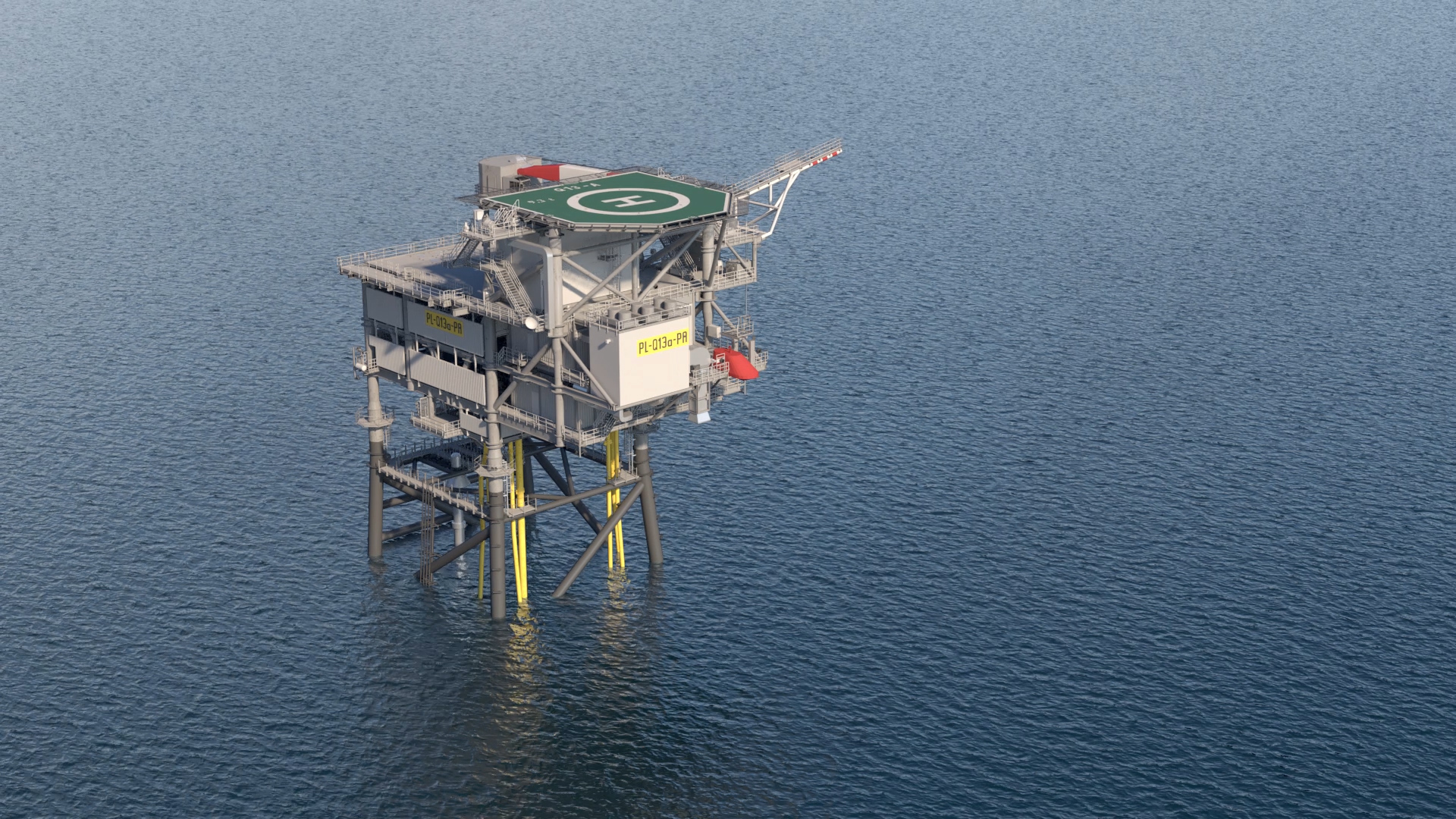
PosHYdon is a Dutch pilot project in the North Sea that demonstrates offshore production of green hydrogen on an existing gas platform. Located off the coast of Scheveningen, it combines offshore wind, hydrogen production, and existing gas infrastructure.
Using electricity from a nearby wind farm, an 1 MW electrolyzer splits treated seawater into hydrogen and oxygen. The green hydrogen is then blended into the natural gas system and transported to shore through existing pipelines.
The project’s main goal is to test whether offshore hydrogen production can become a practical and scalable solution for the future energy system. It also explores how old offshore gas infrastructure can be reused for renewable energy.
The pilot is an initiative of 15 parties, including partners from our programme. NSE is incorporating the lessons learnt from the pilot.
Policy Support
NSE results and learnings have supported Dutch and European policy development on Offshore Wind and Hydrogen
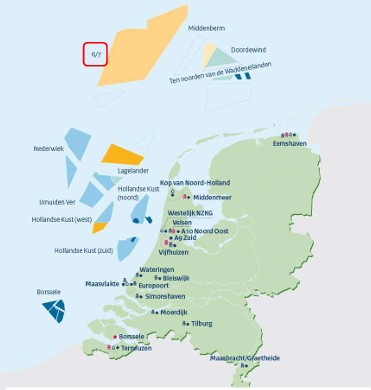
Members of the NSE community have participated in international initiatives such as the EPIN (European Policy Institutes Network) review, and the UK House of Lords. They gave input to the Dutch Nota Ruimte, Programma Noordzee, WIN and the Strategic EIA (MER) for wind area 6/7.
Public Events
Turning research into real-world impact.
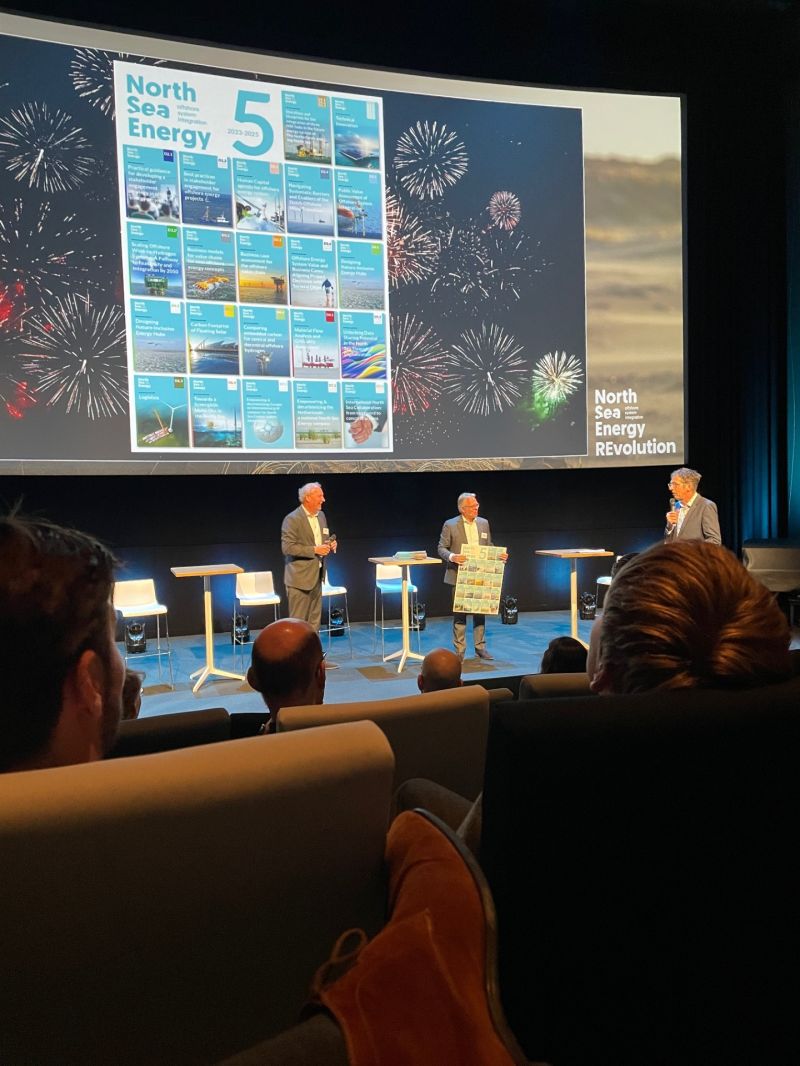
Each phase of the North Sea Energy programme concludes with a dedicated public event, bringing together a broad network of stakeholders from industry, government, academia, and civil society.
Hosted at inspiring venues across the Netherlands —in 2025 at the EYE Filmmuseum in Amsterdam— these invitation-only events showcase the latest research outcomes, practical insights, and innovative solutions developed within the programme.
Fostering ideas and collaborations
Where knowledge meets action.
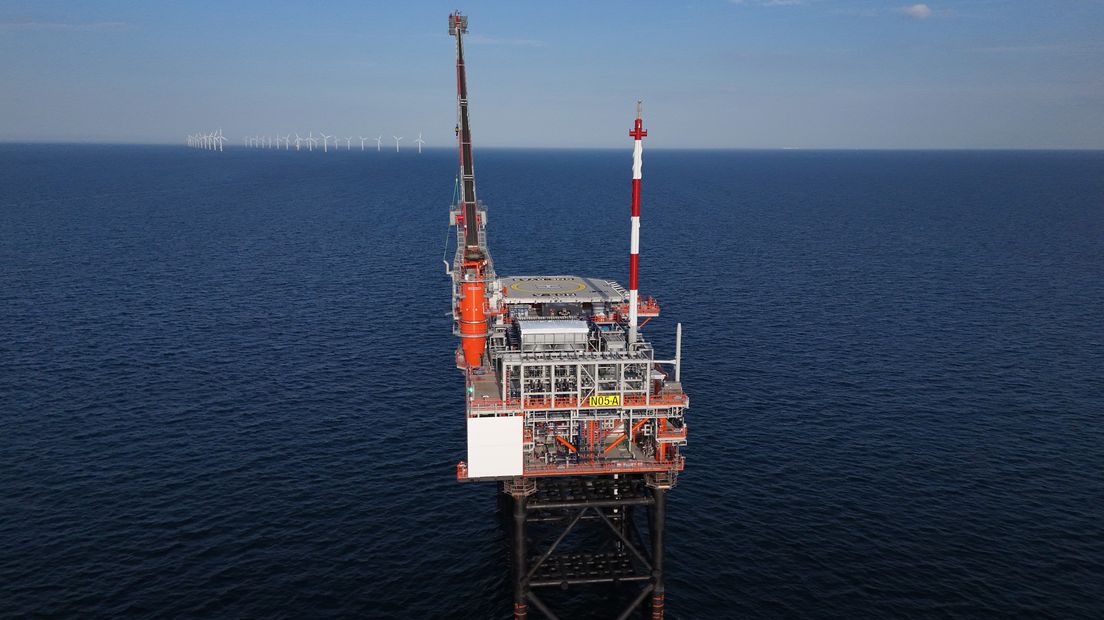
The North Sea Energy (NSE) community has helped create an environment where new ideas and collaborations can grow. By bringing experts together and continuously fostering collaboration, NSE has played an important role in enabling offshore energy development initiatives, such as the electrification of the N05-A platform by One-Dyas.
The platform produces natural gas with virtually no CO2 emissions, as it operates entirely on electricity from the nearby German offshore wind farm Riffgat. Although not directly an NSE spin-off, it was shaped through discussions and knowledge exchange within the NSE network.
Learning community
Spread the word.
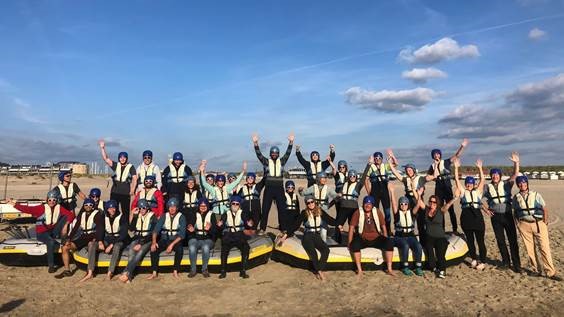
Beyond project development, NSE focuses strongly on sharing knowledge with stakeholders — with schools, libraries, policymakers, members of parliament, festivals, and the wider public.
Through this broad outreach of presentations, webinars and dialogues, the NSE community has contributed to greater understanding of the energy transition across society and in the North Sea in particular. Keep an eye on our agenda for upcoming events.
NSE also supports the next generation of experts by enabling many master’s students and PhD researchers to contribute to and benefit from the community’s work.
Stay Up to Date on the Latest News
New research, insights and developments around the North Sea energy transition are constantly emerging. Get the most relevant updates from North Sea Energy delivered to your inbox.
Sign up for updates